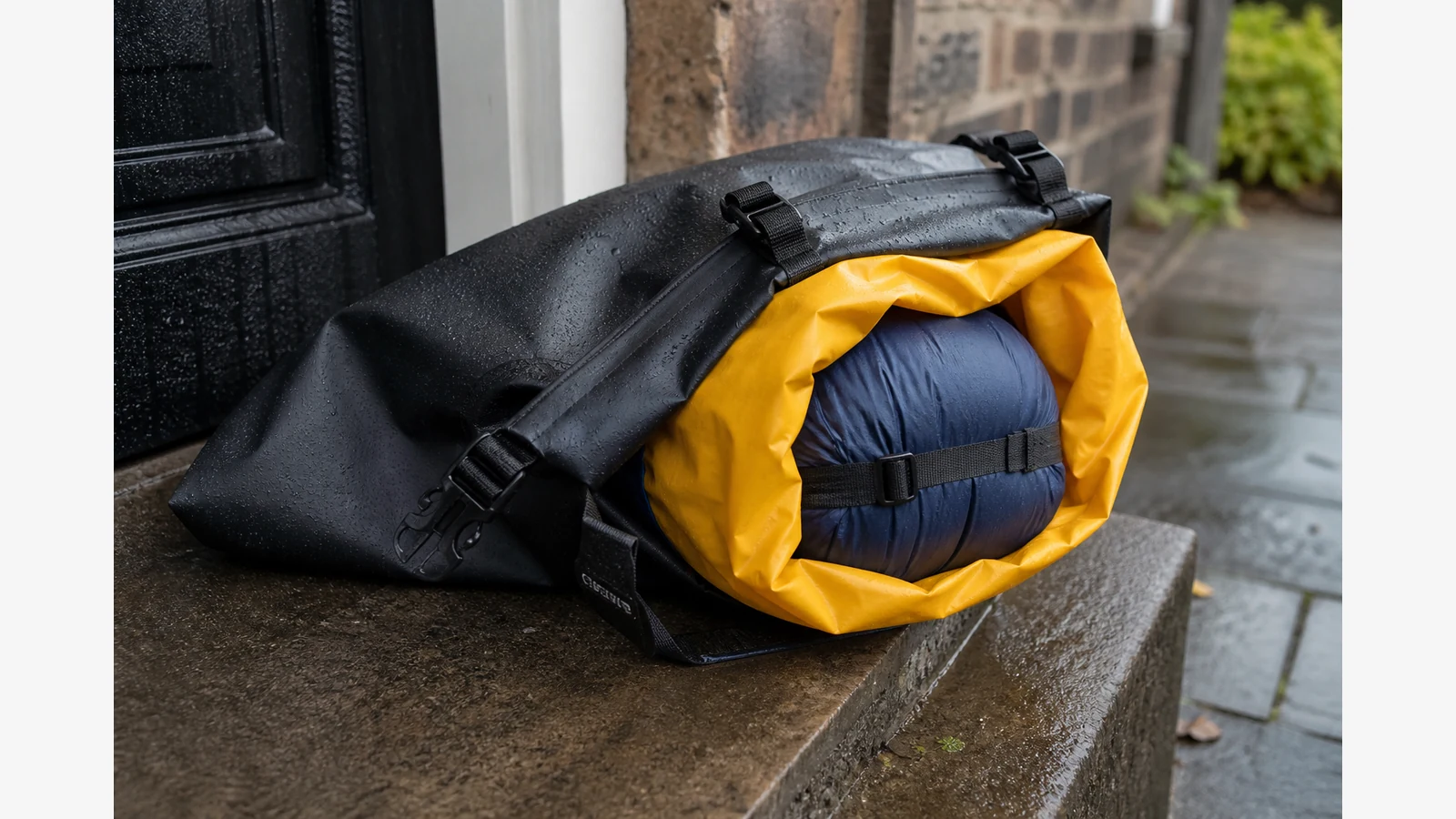
Dry Bag Liner Inside Waterproof Seat Pack Uk
Treat a waterproof seat pack as the outer shell. Double-bag anything that must stay dry in UK rain — especially sleeping bags, down layers and spare base layers — in an inner dry bag before you trust a single roll-top barrier for a full spray day.
Why UK riders still use liners
Packing guides note that many bikepacking bags are water-resistant in practice and recommend dry bags inside for sleeping bags, down, spare clothes and electronics. Wet-weather guidance makes the same redundancy argument: long road spray, tip-overs and vibration are harder on a single barrier than a short shower on the driveway.
Welded PVC roll-tops marketed for UK rain and road spray still benefit from that second layer around must-stay-dry kit. An outer pack can shed weather while an inner liner protects against a imperfect roll, a lean against wet ground, or a brief dunk in a puddle.
Practical liner checklist
- Sleep kit liner — bag/quilt and any down insulation sealed together
- Dry-clothes liner — spare base layers and socks kept separate from damp shells
- Electronics pouch — phone, power bank and lights in their own small dry bag
- Outer pack seal — still roll the seat pack at least three times after liners are inside
- Volume check — confirm three rolls remain possible; liners reduce usable capacity
Size still matters once liners steal volume — compare 10L vs 13L usable capacity. If carbon posts are part of your setup, protect strap contact zones with the habits in carbon seatpost strap protection.
What not to trust
- Submersion confidence from marketing language alone
- Laptops or fragile electronics in an unlined soft pack
- Unlined down storage through a day of continuous spray
- Overfilling so far that you cannot complete three honest rolls
After you confirm liner strategy and remaining roll-top room, you can evaluate a welded roll-top outer such as the 13L waterproof saddle bag as the shell — not as a substitute for inner dry bags.