10L Vs 13L Waterproof Seat Pack Which Size Uk
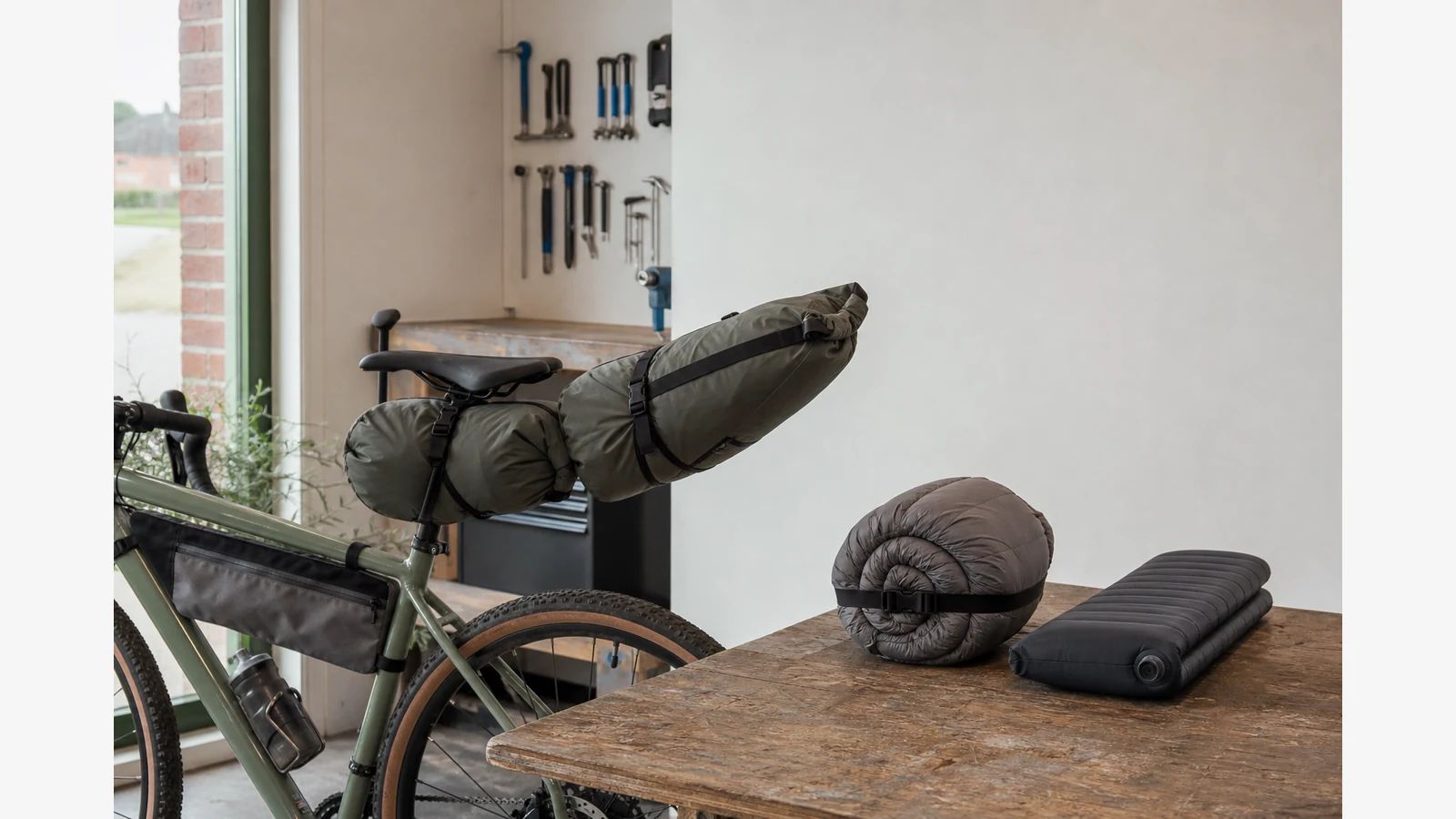
Choose 10L when your overnight sleep kit compresses tightly and you still have room for three roll-top turns; choose 13L when mats, thicker UK layers or a less-aggressive stuff sack need extra usable volume after rolling. Marketing litres are not the same as space you can ride with.
What the litre number actually buys you
Public size guidance for weekend sleep-kit seat packs often sits roughly in an 8–12L band, with larger multi-day loads nearer 12–15L. That band is a planning cue, not a promise that any sleeping bag will fit a named capacity. Compressibility, stuff-sack shape and how many times you roll the closure all change usable volume.
UK packing practice usually parks bulky sleep systems in the saddle bag while denser tools and food stay low in a frame bag. If you only have a seat pack, keep the heaviest items toward the seatpost end and leave the tail for lighter bulk.
UK weather changes the decision
British spring-to-autumn overnighters often add a warmer mid-layer, waterproof shell and less perfectly compressed bedding than a dry summer test pack. Even a compressible bag still needs roll-top room: if the pack is stuffed to the brim, you cannot seal it properly and the bag grows longer toward the tyre.
Before upsizing, confirm you still clear the bike. Soft rack-free packs that list a 15 cm saddle-rail-to-tyre minimum expect that gap when loaded, not only when the bag is empty on the kitchen table.
Decision table: which size fits which trip
| Trip type | Typical load | Size cue |
|---|---|---|
| Day ride / commute | Clothes, shoes, lunch, tools | 10L is often enough if items compress and you keep three rolls |
| One-night summer sleep kit | Light bag or quilt, compact mat, thin spare layer | 10L can work; 13L gives margin for UK layering |
| Bulkier beginner camping kit | Stiffer mat, larger bag, extra warm layers | 13L first; if still overfull, add another bag position instead of forcing one rear pack |
Check usable volume after three rolls and 15 cm clearance
- Pack the exact overnight kit you will carry, not a wish list.
- Roll the closure at least three times and buckle it closed.
- Mount the pack and measure from the lowest saddle-rail point to the highest tyre point under load.
- If clearance is tight, shorten the packed length (better compression or a smaller kit) before buying a longer bag that hangs lower.
Related fit reading: how sleep kit sits in a rear pack versus a front roll in seat pack vs handlebar bag packing, and how dropper posts shrink clearance in dropper clearance checks.
Who should stay on 10L — and who needs another bag
Stay on 10L if your sleep system and spare layer pack into a compact cylinder with roll room left, your rails-to-tyre gap is modest, and you prefer a shorter lever behind the saddle. Move to 13L if the same kit fails three rolls, or if UK layers regularly leave you cutting essentials.
If even 13L is full before you roll, do not assume a bigger seat pack is the answer. Split denser items into a frame bag or keep emergency layers up front, and revisit whether the overnight kit itself is too bulky for rack-free riding.
When you have confirmed sleep-system bulk and clearance, compare adjustable roll-top seat-pack options on the 13L waterproof saddle bag product page.