Dropper Post Large Seat Pack Clearance Uk
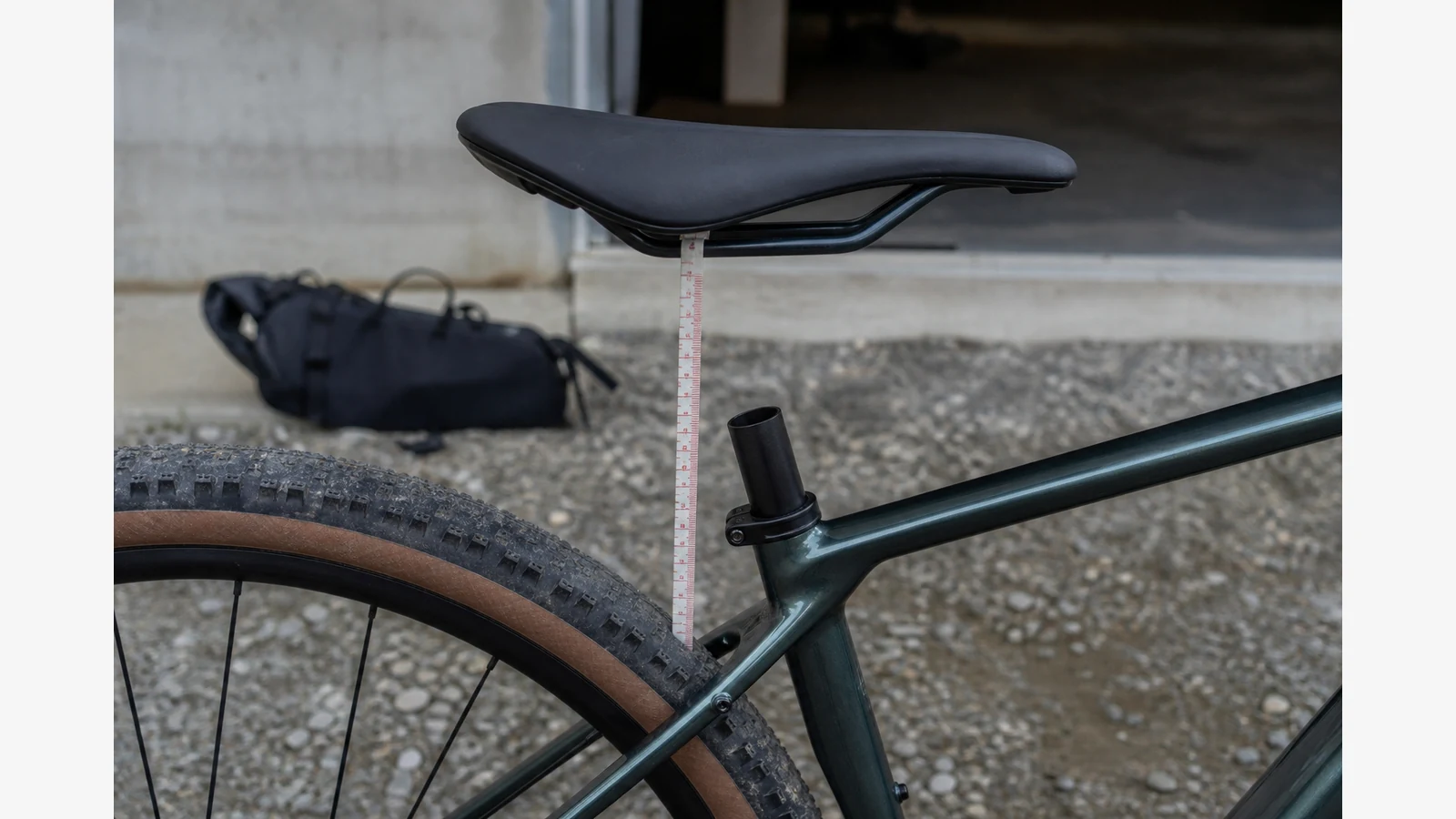
If you run a dropper, measure saddle-rail-to-tyre clearance with the post fully down before buying a large rack-free seat pack. Riding-height space can look fine while full drop leaves the bag kissing the tyre on the first wet gravel descent.
Why UK gravel riders hit this problem
Short exposed post lengths, 40–45 mm tyres and muddy guards shrink the window quickly. Dropper-oriented seat bags in public gear indexes are often far smaller than a 13L soft pack precisely because clearance, not marketing capacity, is the binding constraint.
Public dropper bikepacking guidance commonly discusses roughly 13–23 cm of needed clearance depending on bag design. Limited space may push riders toward smaller packs, travel limiters or racks rather than forcing a long soft bag into a short drop window.
Step check before you buy
- Drop the post fully and sit the bike as you would on a steep pitch.
- Measure from the lowest point of the saddle rails to the highest point of the rear tyre (include mud if that is how you ride).
- Add a bounce buffer for bag sag and tyre deformation under load — a static millimetre match is not a riding margin.
- Compare that working gap with any product minimum. Soft packs that publish a 15 cm loaded rails-to-tyre requirement expect that figure under real packing, not an empty bag.
If you are still choosing pack volume after clearance, see 10L vs 13L size guidance.
When a large soft pack is the wrong tool
- Short-travel gravel droppers with wide tyres and little exposed post: favour a dropper-specific smaller bag or a different luggage layout.
- Travel limiters: some riders sacrifice a few millimetres of drop to protect clearance; treat that as a bike setup choice, not a bag feature claim.
- Racks or alternative mounts: if full-drop clearance cannot stay honest under load, a rack or front/frame volume may be safer than a long rear lever.
Do not assume a rack-free 13L soft pack is dropper-compatible or zero-travel-safe. Clearance is bike- and tyre-specific; the bag cannot invent millimetres that are not there.
Only after a full-drop measurement clears your safety buffer should you review a candidate pack such as the 13L waterproof saddle bag.